Die Cutting Explained
You may well encounter various products that can be die-cut to a custom shape. But what does that mean? And more importantly, how can it help you create the perfect printed business cards? Read on to learn all about die cutting…
What is Die Cutting?
In the world of printing, die cutting provides a quick and inexpensive way of cutting lots of printed items into identical shapes.
Your design is printed on a square or rectangular sheet of material (typically paper or card), then placed in a machine which has been loaded with a custom-made ‘die’ or ‘punch block’ (a block of wood with a metal blade, bent and folded into the desired shape).
When the machine presses the printed sheet and the die together, it cuts out the shape of the blade into the material in an instant.
Your design is printed on a square or rectangular sheet of material (typically paper or card), then placed in a machine which has been loaded with a custom-made ‘die’ or ‘punch block’ (a block of wood with a metal blade, bent and folded into the desired shape).
When the machine presses the printed sheet and the die together, it cuts out the shape of the blade into the material in an instant.
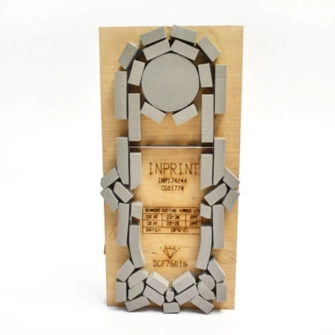
Die Cut Block
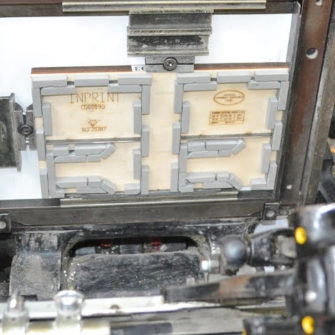
Block Mounted on Platten
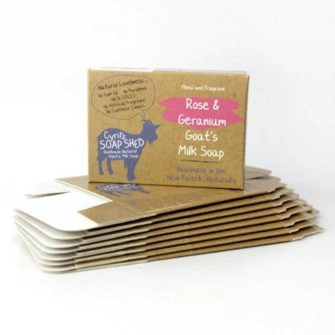
Custom Cut Boxes
Frequent Die Cutting Questions
Below are some of the most common questions we’re asked about die cutting, including how it works, which materials can be cut, and when it’s best suited for business cards. These answers should help you understand whether die cutting is the right option for your project before placing an order.
With die-cutting, you can create your desired shape quickly and efficiently in one swift motion, avoiding the time-consuming process of using a digital cutter to maneuver through curves and corners. Once the die is created, it can be reused multiple times to produce hundreds of identical, custom-shaped business cards.
Die-cutting is most effective on low strength materials such as paper and card, due to the ‘punch-out’ style of cutting. The minimum paper weight suitable for die-cutting is 170gsm (approximately 140micron), and the maximum weight is 500gsm (approximately 600micron). The thickness is measured in microns, which is equivalent to thousandths of a millimetre. It is important to note these specifications when choosing materials for die-cutting business cards.
For heavier weight large format materials, digital die-cutting is typically required. Unlike traditional die cutting, which utilizes physical dies to create the shape, digital cutting relies on a blade that follows a computer-programmed path to produce the desired shape.
Digital cutting machines are comprised of a flat table area and a collection of cutting, milling, and scoring attachments mounted on an arm. This arm enables the cutter to move left, right, forwards, and backwards.
To use a digital cutting machine, the printed sheet is placed on the table, and the cutter moves across the sheet along the programmed path to create the desired shape, providing a more efficient method for producing unique and customized large format business cards.
Digital cutting machines are comprised of a flat table area and a collection of cutting, milling, and scoring attachments mounted on an arm. This arm enables the cutter to move left, right, forwards, and backwards.
To use a digital cutting machine, the printed sheet is placed on the table, and the cutter moves across the sheet along the programmed path to create the desired shape, providing a more efficient method for producing unique and customized large format business cards.
Digital Die Cut Paper and Card
Advances in technology now make it possible to achieve high-quality “die-free” cutting across a wide range of paper and card weights, making it a practical option for custom business cards. By removing the need for a physical die block, this process helps reduce both production costs and turnaround times.
While digital die cutting is not designed for the same high volumes as traditional die cutting, it is an ideal solution for shorter runs of business cards, one-off designs, or prototypes created ahead of larger production runs using conventional die-cutting formes.
If you’re unsure which cutting method is right for your business cards, get in touch with our team and we’ll be happy to advise on the best option for your requirements.
While digital die cutting is not designed for the same high volumes as traditional die cutting, it is an ideal solution for shorter runs of business cards, one-off designs, or prototypes created ahead of larger production runs using conventional die-cutting formes.
If you’re unsure which cutting method is right for your business cards, get in touch with our team and we’ll be happy to advise on the best option for your requirements.